

NIPT Test (Basic & Advanced)
Non-Invasive Prenatal Testing (NIPT) is an advanced prenatal screening test that analyzes small fragments of fetal DNA present in the mother’s blood. It helps assess the risk of certain chromosomal abnormalities in the baby safely and accurately without harming the pregnancy. NIPT can usually be performed from the 10th week of pregnancy onward.
NIPT is recommended to:
- Detect common chromosomal conditions early in pregnancy
- Provide reassurance for expecting parents
- Help doctors plan further diagnostic testing if required
- Reduce the need for invasive procedures in low-risk pregnancies
- Determine fetal gender if desired
Basic NIPT Test
Basic NIPT mainly screens for the most common chromosomal abnormalities:
- Down Syndrome (Trisomy 21)
- Edwards Syndrome (Trisomy 18)
- Patau Syndrome (Trisomy 13)
Some panels may also include fetal gender identification.
Advanced NIPT Test
Advanced NIPT includes everything covered in the Basic test plus additional genetic screening such as:
- Sex chromosome abnormalities
- Turner Syndrome
- Klinefelter Syndrome
- Triple X Syndrome
- XYY Syndrome
- Selected microdeletion syndromes
- In some panels, single-gene disorders may also be screened

Why Choose MEDIC?

100% SAFE
Only 9ml of maternal blood required

AS EARLY AS POSSIBLE
Test performed from the 10th gestational week

FAST & RELIABLE RESULTS
Highly accurate results available within 10-15 business days

EASY HANDLING
MEDIC NIPT kit free of charge. Return shipment via phone call
Non-invasive Prenatal Testing – NIPT TEST

Panorama NIPT
Standard
Used for screening:
- Trisomy 21), Edwards syndrome (Trisomy 18), and Patau syndrome (Trisomy 13)
- Baby’s genetic health
FEATURES
- Utilizes SNP-based technology – the only NIPT of its kind for enhanced precision
- Can be conducted as early as 9 weeks of pregnancy
- Delivers results within 10–12 days
- Provides the most accurate NIPT report available

Panorama NIPT Standard + 22q11.2 Deletion
Used for screening:
- Common chromosomal abnormalities (e.g., Trisomy 21, 18, 13)
- 22q11.2 deletion syndrome and other genetic disorders
FEATURES
- SNP-based technology – highest precision and reliability
- The most advanced NIPT offering deeper genetic insights
- Comprehensive NIPT report
- Results in 10-12 days
- Can be tested at the earliest as 9 weeks.

Panorama NIPT Standard + All 5 Microdeletions
Used for screening:
- Common chromosomal abnormalities (Trisomy 21, 18, 13)
- Detecting five major microdeletion syndromes, including 22q11.2 deletion
- Offering a detailed overview of the baby’s genetic health early in pregnancy
FEATURES
- SNP-based technology for superior accuracy and depth
- Most advanced NIPT providing broader genetic insights
- Can be performed from 9 weeks of gestation
- Fast results within 10–12 days
- Delivers precise and comprehensive NIPT report
Approximately 1% of All Babies Will Be Born With a Chromosomal Abnormality
Fetal chromosomal abnormalities are causing physical disability and/or mental retardation. 70% of syndromic congenital abnormalities are contributed by Trisomy T21, T18 or T13 and 10% by Turner syndrome (Monosomy X). The risk of trisomy increases significantly with maternal age
Trisomies
| Trisomies | Sensitivity | Specificity |
|---|---|---|
| Trisomy 21 (Down syndrome) | >99.9% | 99.9% |
| Trisomy 18 (Edwards syndrome) | >99.9% | 99.9% |
| Trisomy 13 (Patau syndrome) | >99.9% | 99.9% |
Sex Chromosome Aneuploidies & Fetal Gender
| Sex Chromosome Aneuploidies | Concordance with Cytogenetic Results |
|---|---|
| XX | 100.0 % |
| XY | 100.0 % |
| X0 (Turner syndrome) | 90.5 % |
| XXX (Triple X syndrome) | 100.0 % |
| XXY (Klinefelter syndrome) | 100.0 % |
| XYY (Jacobs syndrome) | 91.7 % |
How the Test Works
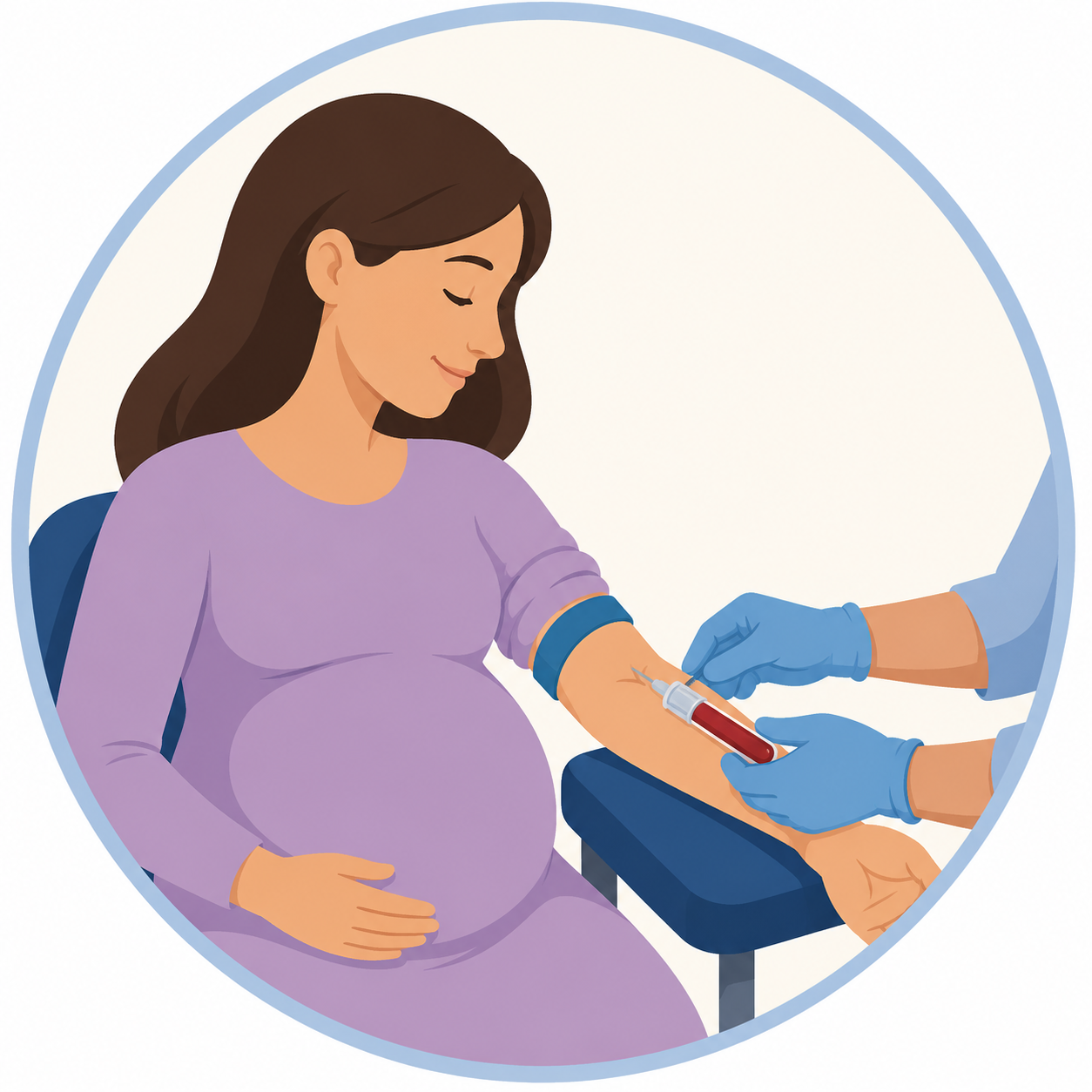
1. A maternal blood sample is collected at the clinic or home.
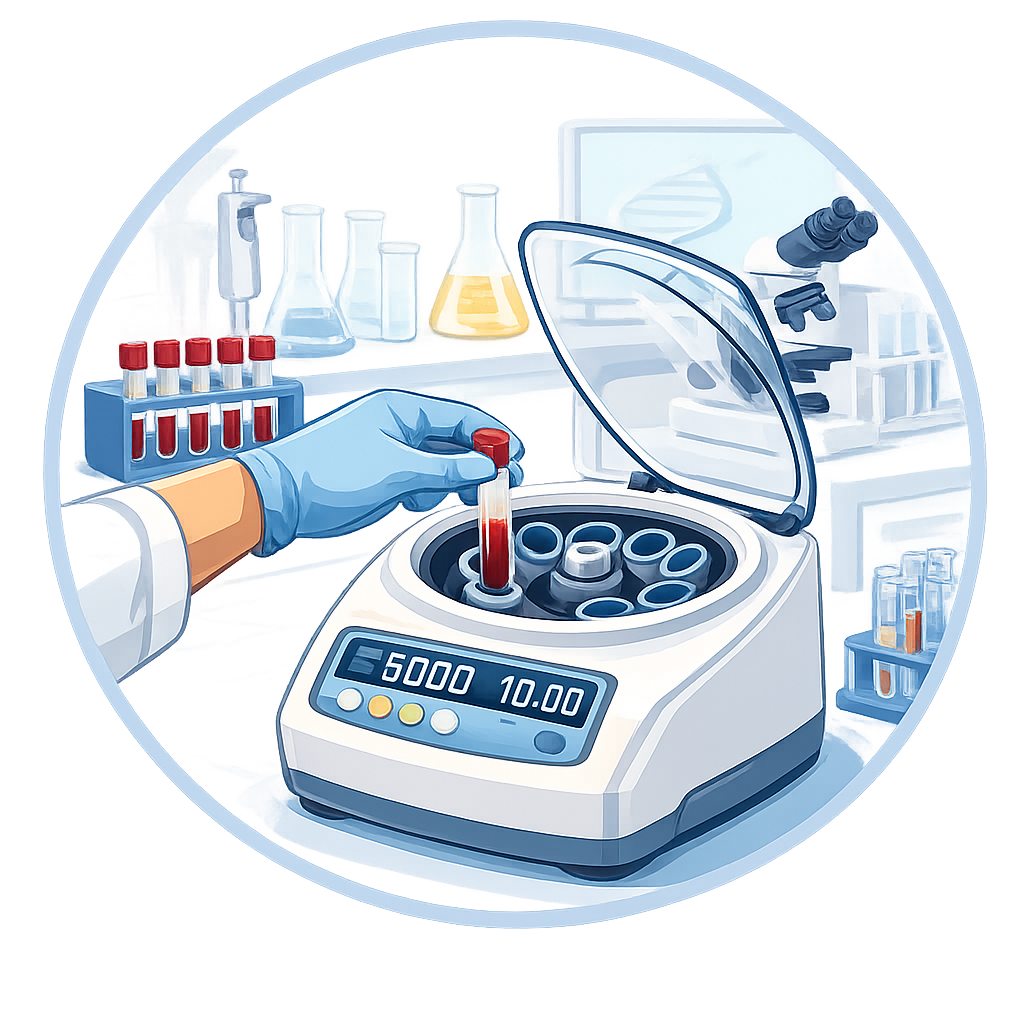
2. The sample is processed in a specialized laboratory.
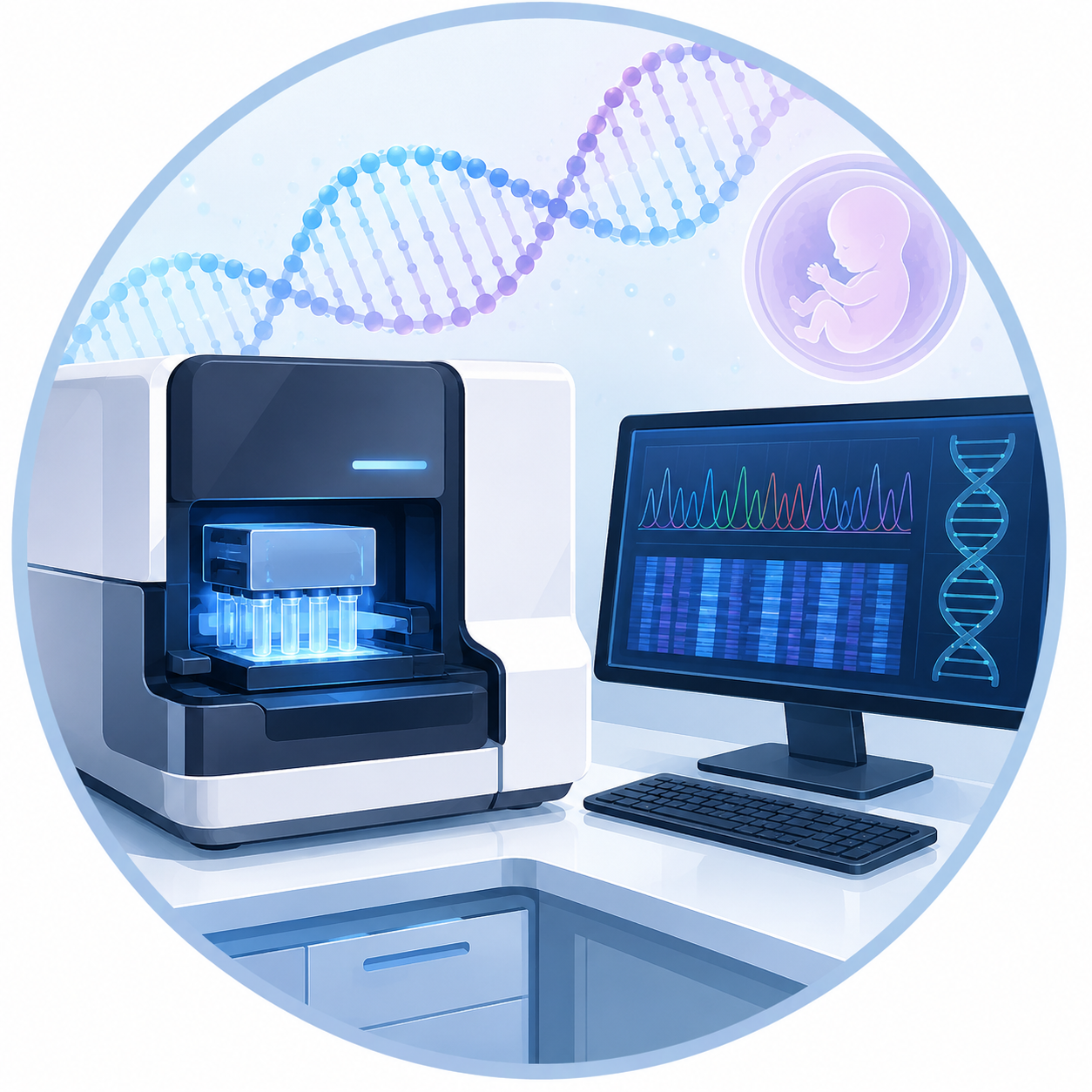
3. Advanced DNA sequencing technology analyzes fetal chromosomal information.

4. Detailed reports and consultation support are provided within days.
NIPT is highly accurate for detecting common chromosomal abnormalities, especially Down syndrome, with detection rates close to 99%. However, it is important to understand that NIPT is a screening test, not a diagnostic test. Positive results may require confirmation through CVS or amniocentesis. While Advanced NIPT offers broader screening, some rare-condition panels may have higher false-positive rates compared to the standard trisomy screening. Genetic counseling may help in selecting the most appropriate test panel.