
Dental Radiology
Dental Radiology involves advanced imaging techniques used to diagnose and evaluate conditions related to teeth, jaws, and surrounding oral structures. It includes procedures such as OPG (panoramic X-ray), intraoral X-rays, and other specialized imaging for comprehensive dental assessment.
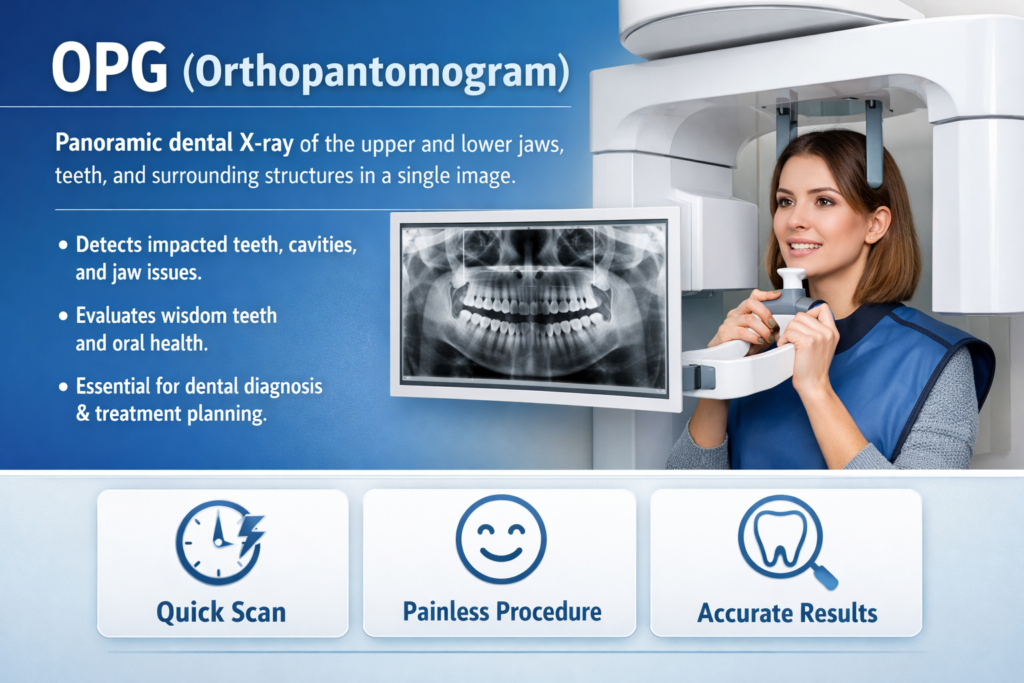
OPG (Orthopantomogram)
Panoramic dental X-ray covering upper & lower jaws in one image
Detects impacted teeth, cavities, and jaw abnormalities
Helps evaluate wisdom teeth position
Identifies infections, cysts, and bone-related issues
Useful for orthodontic and implant planning
Quick, painless, and non-invasive procedure
Provides complete overview of oral health
Essential for accurate diagnosis and treatment planning
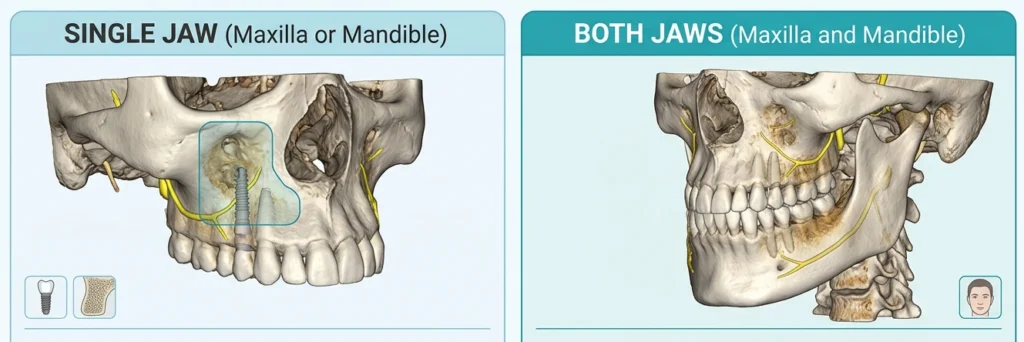
Cone Beam CT (CBCT) – Single Jaw / Both Jaws
Cone Beam CT (CBCT) is an advanced 3D imaging technique that provides highly detailed views of the teeth, jawbones, nerves, and surrounding structures. It is available for scanning a single jaw (upper or lower) or both jaws, depending on the diagnostic requirement.
3D imaging of teeth and jaw structures
Single jaw or full jaw (both jaws) scanning available
Ideal for dental implants & orthodontic planning
Detects cysts, infections, and bone abnormalities
Low radiation & quick procedure
Highly accurate and detailed results
Ask what you want to know
Frequently Asked Questions
1. What is dental radiology?
Dental radiology uses specialized imaging techniques to capture detailed images of teeth, gums, jawbones, and surrounding oral structures for diagnosis and treatment planning.
2. What types of dental X-rays are commonly used?
Common dental imaging includes panoramic X-rays, intraoral X-rays, cephalometric imaging, and 3D CBCT scans for detailed dental evaluation.
3. Why are dental radiology scans important?
They help dentists detect cavities, infections, impacted teeth, bone loss, jaw disorders, and other oral health conditions that may not be visible during a routine examination.
4. Are dental X-rays safe?
Yes. Modern dental radiology uses low-dose radiation technology and safety measures to minimize exposure.
5. How long does a dental radiology procedure take?
Most dental imaging procedures are quick and typically completed within a few minutes, depending on the type of scan required.