
MEDIC

Cardiology investigation

Cardiology investigation

Cardiology investigations are a range of diagnostic tests used to evaluate the structure, function, and overall health of the heart. These include non-invasive tests like ECG (electrocardiogram), echocardiography, treadmill test (TMT), Holter monitoring, and ambulatory blood pressure monitoring, which help detect irregular heart rhythms, assess heart function, and monitor blood pressure over time. Advanced imaging techniques such as cardiac CT and MRI provide detailed views of the heart and coronary arteries, while procedures like coronary angiography help identify blockages and guide treatment. Along with these, blood tests such as lipid profile and cardiac markers play an important role in assessing heart disease risk and diagnosing heart conditions, ensuring accurate and timely cardiac care.
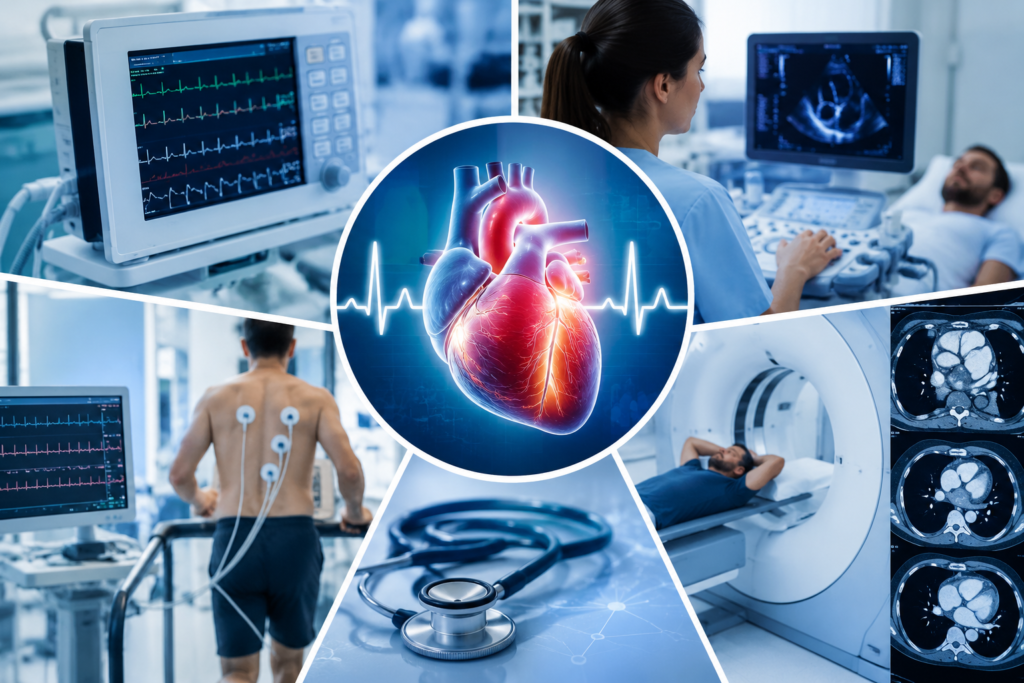
Advanced Cardiology Investigations

Echo cardiogram
Echocardiography (2D Echo) is a non-invasive ultrasound test that creates real-time images of the heart to assess its structure and function.
It helps evaluate heart valves, pumping efficiency, and detect various cardiac conditions safely and accurately.
TMT (Treadmill Test / Stress Test)
TMT evaluates how the heart performs under physical stress. The patient walks on a treadmill while heart activity is monitored. It helps detect coronary artery disease, exercise tolerance, and hidden heart problems not seen at rest.
Holter Monitoring
Holter monitoring is a continuous ECG recording done over 24–48 hours while the patient carries out daily activities. It helps detect intermittent arrhythmias, palpitations, and unexplained dizziness or fainting episodes.
Ambulatory Blood Pressure Monitoring (ABPM)
ABPM measures blood pressure continuously over 24 hours during normal daily routine and sleep. It helps diagnose hypertension, white-coat hypertension, and evaluate treatment effectiveness.
Ask what you want to know

Frequently Asked Questions

1. What are cardiology investigations?
Cardiology investigations are diagnostic tests used to evaluate heart health, blood circulation, and cardiovascular function.
2. What conditions can cardiology tests help detect?
They may help identify heart disease, irregular heartbeat, blocked arteries, high blood pressure, heart valve disorders, and other cardiovascular conditions.
3. What are common cardiology investigations?
Common tests include ECG, Echocardiogram, Stress Test, Holter Monitoring, CT Coronary Angiography, and Cardiac MRI.
4. Are cardiology investigations painful?
Most cardiology tests are non-invasive, safe, and painless, with minimal discomfort during certain procedures.
5. Who should undergo cardiology investigations?
Individuals with chest pain, shortness of breath, high blood pressure, diabetes, family history of heart disease, or cardiac symptoms may benefit from evaluation.

About Us

Much More ThanH ealth Care – “Human Care”

Contact Info

Level 2, Office Block, Hamsah Complex, Above Ansar Gallery, Karama, Dubai,UAE.

Cart (0 items)
Select the fields to be shown. Others will be hidden. Drag and drop to rearrange the order.
  • Image
  • SKU
  • Rating
  • Price
  • Stock
  • Availability
  • Add to cart
  • Description
  • Content
  • Weight
  • Dimensions
  • Additional information
Click outside to hide the comparison bar
Compare