
Fluoroscopy
Fluoroscopy is an advanced imaging technique that uses continuous X-ray beams to produce real-time moving images of internal body structures. It allows doctors to observe the function of organs, joints, and blood flow, making it highly useful for both diagnosis and guided procedures.

HSG (Hysterosalpingogram)
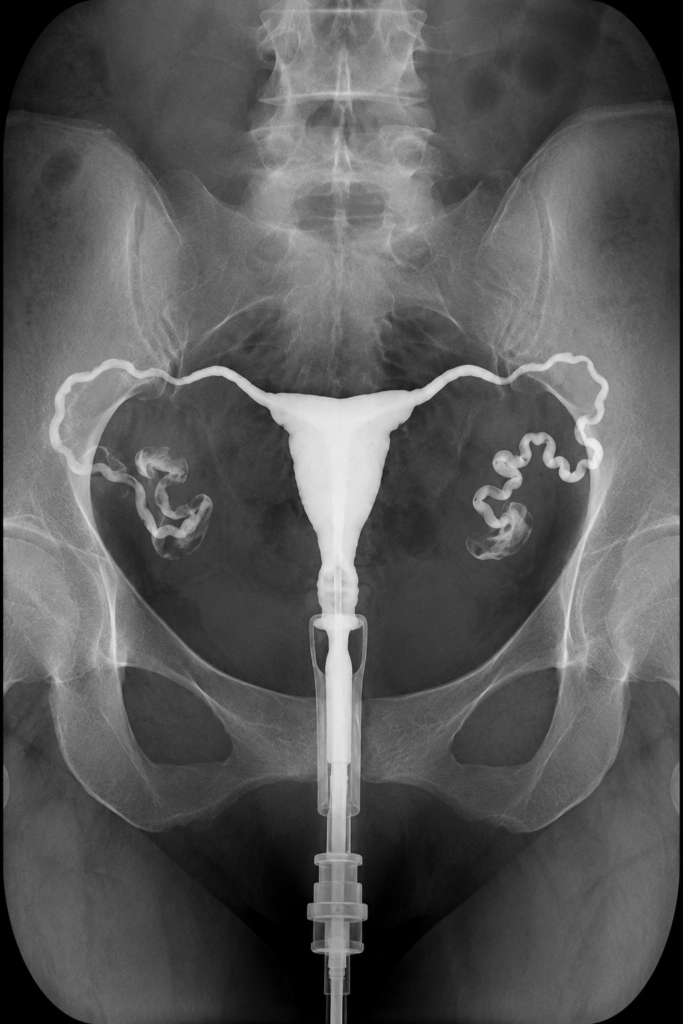
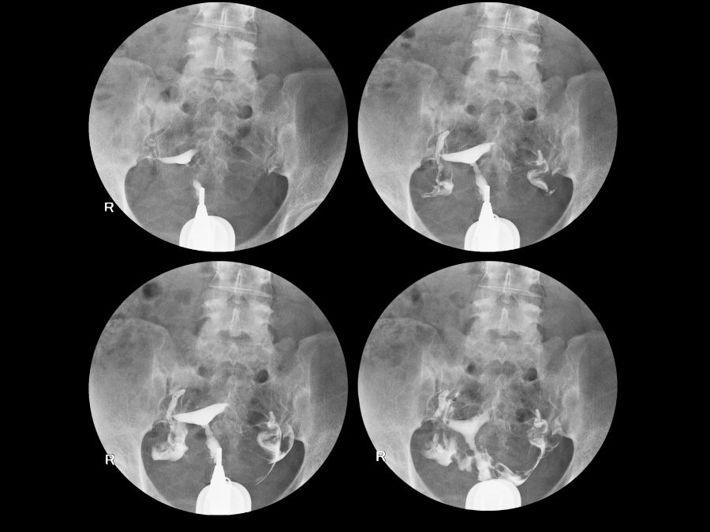
Hysterosalpingogram (HSG) is a specialized X-ray procedure used to evaluate the uterus and fallopian tubes, primarily in women facing infertility issues. During the procedure, a contrast dye is gently introduced into the uterus to visualize the shape of the uterine cavity and check whether the fallopian tubes are open or blocked.
Specialized imaging to assess uterine cavity and tubal patency.
Accurate • Quick • Essential for Fertility Evaluation
What is HSG?
HSG (Hysterosalpingography) is a specialized X-ray procedure used to examine the uterus and fallopian tubes. A contrast dye is gently injected into the uterus to check whether the fallopian tubes are open and to identify any abnormalities that may affect fertility.
When to Do HSG?
HSG is usually performed:
- After menstrual periods but before ovulation
- As part of an infertility evaluation
- When there is difficulty in conceiving
- To check blocked fallopian tubes
- After recurrent miscarriages
- Following certain gynecological procedures or surgeries
Benefits of HSG
- Helps identify blocked fallopian tubes
- Evaluates the shape and condition of the uterus
- Assists in diagnosing infertility issues
- Detects uterine abnormalities, adhesions, or polyps
- Quick, minimally invasive diagnostic procedure
- Helps doctors plan appropriate fertility treatment
What is the Benefit of Doing HSG?
Doing an HSG can help determine possible causes of infertility and improve the chances of successful treatment. In some cases, the procedure may even help open mildly blocked tubes, increasing the possibility of natural conception.