
MRI Cancer Diffusion
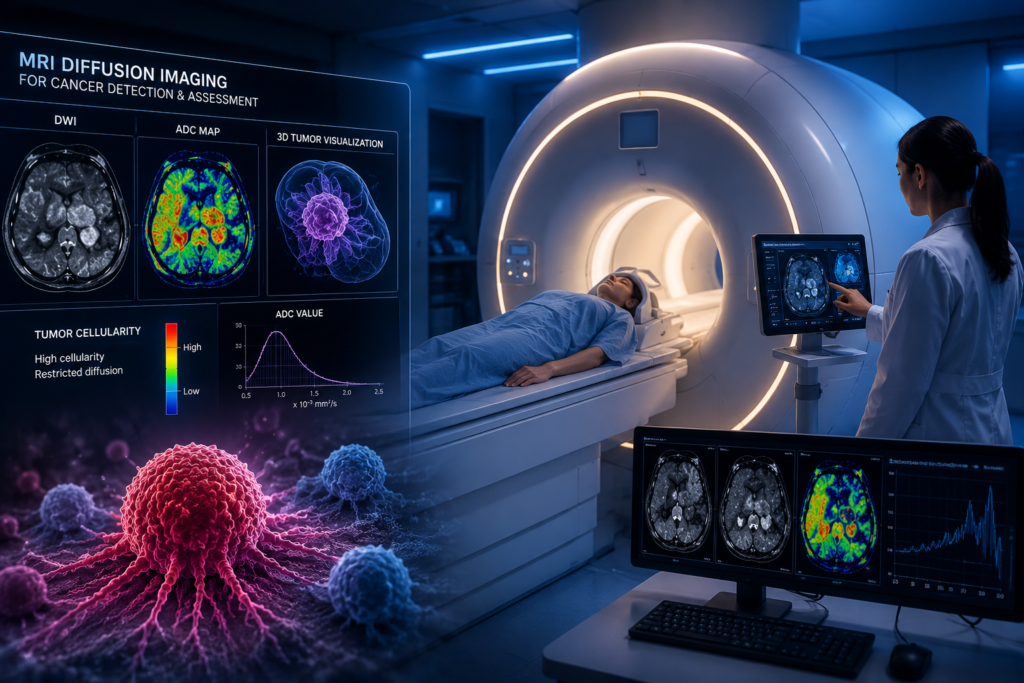
MRI diffusion imaging is a powerful diagnostic technique that helps detect, characterize, and monitor cancer by analyzing the movement of water molecules within tissues. This non-invasive imaging method provides valuable insights into tumor cellularity, helping clinicians identify abnormalities at an early stage and assess treatment effectiveness with greater accuracy.
What is MRI Diffusion Imaging?
Magnetic Resonance Imaging (MRI) Diffusion-Weighted Imaging (DWI) measures the microscopic movement of water molecules within body tissues. Cancerous tumors often restrict water diffusion due to their high cellular density, making diffusion imaging an essential tool for identifying malignant lesions and differentiating them from healthy tissue. By combining anatomical MRI scans with diffusion imaging, radiologists can gain a more comprehensive understanding of tumor behavior and disease progression.
Benefits of MRI Diffusion Imaging for Cancer
Early Detection
Diffusion imaging can identify cancerous changes before they become visible through conventional imaging techniques.
Improved Tumor Characterization
Helps distinguish between benign and malignant lesions, supporting accurate diagnosis and treatment planning.
Non-Invasive Assessment
Provides detailed information without the need for surgical procedures or invasive diagnostic methods.
Treatment Monitoring
Evaluates how tumors respond to chemotherapy, radiation therapy, or targeted treatments by measuring changes in cellular activity.
Reduced Radiation Exposure
Unlike CT scans and PET imaging, MRI diffusion imaging does not use ionizing radiation.
Applications in Cancer Diagnosis
MRI diffusion imaging is widely used for the evaluation of various cancers, including:
- Brain Tumors
- Breast Cancer
- Prostate Cancer
- Liver Cancer
- Pancreatic Cancer
- Head and Neck Cancers
- Gynecological Cancers
- Colorectal Cancer
- Bone and Soft Tissue Tumors
Its ability to provide functional information alongside anatomical imaging makes it a valuable tool across multiple oncology specialties.
How the Procedure Works
- The patient is positioned comfortably inside the MRI scanner.
- Specialized diffusion-weighted sequences are performed during the scan.
- Water molecule movement within tissues is measured and analyzed.
- Advanced software generates diffusion maps and Apparent Diffusion Coefficient (ADC) values.
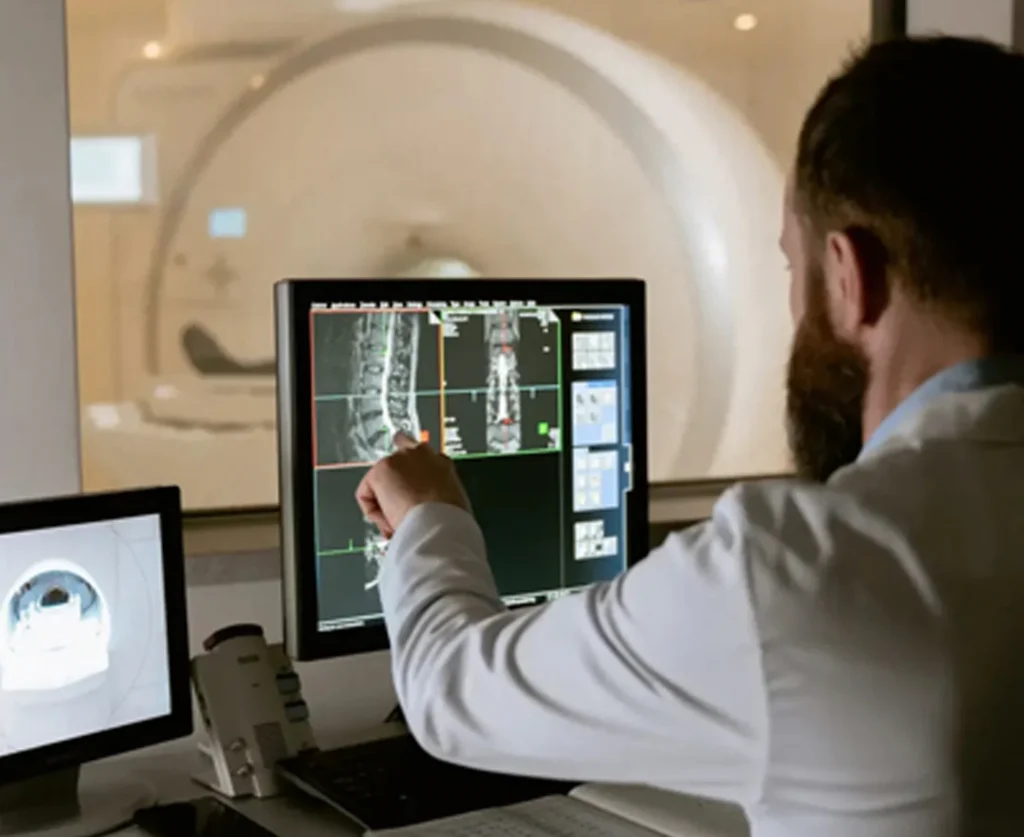
- Radiologists interpret the results to identify suspicious areas and assess tumor characteristics.
The procedure is safe, painless, and typically completed within 30–60 minutes, depending on the area being examined.
Why MRI Diffusion Imaging Matters in Cancer Care
Modern cancer management requires precise and timely information. MRI diffusion imaging offers clinicians a deeper understanding of tumor biology, enabling:
- More accurate diagnoses
- Better treatment planning
- Earlier assessment of treatment response
- Enhanced patient monitoring
- Improved clinical decision-making
This advanced imaging technology plays a critical role in personalized cancer care by helping healthcare providers tailor treatments to each patient’s specific condition.
Schedule Your MRI Diffusion Imaging Consultation
Early and accurate cancer detection can make a significant difference in treatment outcomes. Our advanced MRI diffusion imaging services provide the detailed diagnostic information needed to support effective cancer management and personalized patient care.